People in History
By Vic Ranier Tamayo
Throughout history, certain individuals have left a profound impact on the world, shaping societies, sciences, politics, and culture. These figures, from philosophers and scientists to activists and leaders, challenged norms and laid foundations that continue to influence us today. Here are 15 historical figures from across the globe whose contributions changed the world.
Socrates (469–399 BCE) – Greece

Socrates was an ancient Greek philosopher, widely considered one of the founders of Western philosophy. Born in Athens around 470 BCE, he left no written works, so most of what we know about him comes from his students, especially Plato. Socrates was known for his distinctive approach to philosophy, which involved asking open-ended questions to explore concepts like truth, justice, and virtue. This method, now called the Socratic Method, aimed to reveal contradictions in people’s beliefs, encouraging them to think more deeply.
Socrates led a simple life, valuing wisdom over wealth, and spent his days engaging with Athenians from all walks of life. His questioning often challenged conventional views, which made him both respected and controversial. Eventually, he was put on trial for allegedly corrupting the youth and not believing in the gods of Athens. He was sentenced to death and accepted his fate with composure, staying true to his principles. His life and ideas laid the groundwork for ethics and critical thinking in Western philosophy.
Why did Socrates believe that “the unexamined life is not worth living”?
Answer me!
Confucius (551–479 BCE) – China
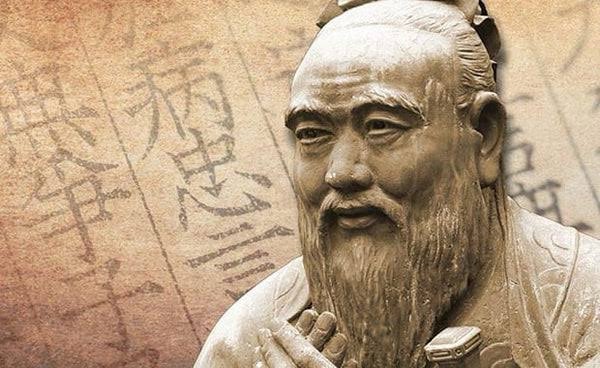
Confucius was an ancient Chinese philosopher and teacher, born around 551 BCE in the state of Lu, during the Zhou Dynasty. He developed a system of ethical teachings, now known as Confucianism, which emphasizes moral integrity, social harmony, and respect for family and tradition. Confucius believed that a just and peaceful society could be achieved if individuals practiced virtues like filial piety (respect for parents), honesty, and benevolence. His ideas, recorded by his disciples, have greatly influenced East Asian culture, shaping values in education, governance, and personal behavior for over two millennia.
Fun fact:
Confucius is said to have been a great lover of music—he believed that music had the power to improve moral character and bring harmony to society. In fact, he even composed some of his own music during his lifetime!
Cleopatra VII (69–30 BCE) – Egypt
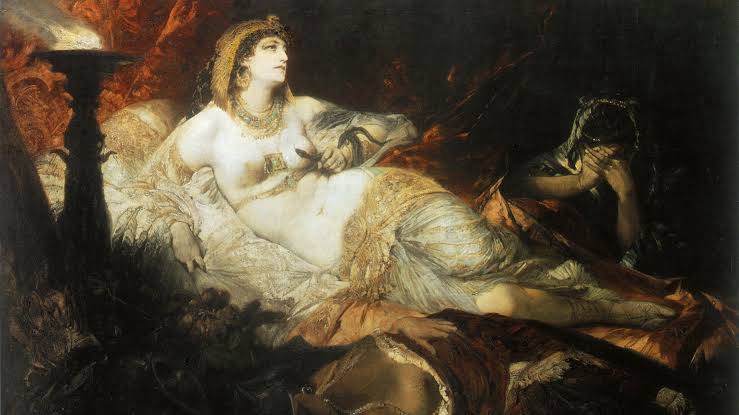
Cleopatra VII was the last active ruler of the Ptolemaic Kingdom of Egypt, born in 69 BCE. Known for her intelligence, political acumen, and charm, she played a pivotal role in Egyptian history during a time of political instability. Cleopatra was a skilled diplomat, military leader, and fluent in several languages. She became famous for her romantic and political alliances with two powerful Roman leaders, Julius Caesar and Mark Antony, which helped her maintain power and protect Egypt’s independence from Roman control.
Despite her efforts, Cleopatra’s relationship with Mark Antony led to a conflict with Rome, and after their defeat by Augustus (formerly Octavian), Cleopatra and Antony both committed suicide in 30 BCE. Cleopatra’s life and legacy have been the subject of fascination for centuries, symbolizing a powerful woman in a male-dominated world. Her reign marked the end of the ancient Egyptian monarchy and the beginning of Egypt’s annexation into the Roman Empire.
What role did Cleopatra’s alliances with Julius Caesar and Mark Antony play in her reign?
Answer me!
Muhammad (c. 570–632) – Saudi Arabia
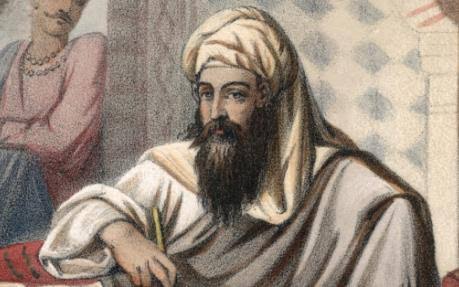
Muhammad (c. 570–632 CE) was the founder of Islam and is considered by Muslims to be the final prophet sent by God to guide humanity. Born in Mecca, in present-day Saudi Arabia, Muhammad belonged to the Quraysh tribe. He received his first revelation at the age of 40, through the angel Gabriel, and over the next 23 years, he preached a message of monotheism, social justice, and moral integrity, which became the foundation of Islam.
Muhammad’s teachings were recorded in the Quran, the holy book of Islam, and his life and sayings, known as the Hadith, provide further guidance for Muslims. Despite facing persecution and opposition from the leaders of Mecca, Muhammad’s message spread across the Arabian Peninsula, and after his death, it continued to expand, eventually becoming one of the world’s major religions. Muhammad is deeply revered by Muslims as the Seal of the Prophets, the final messenger in a long line of prophets that includes figures like Abraham, Moses, and Jesus.
Fun fact:
Muhammad was known for his love of animals. He treated animals with kindness and respect, and one of his most famous sayings is, “Whoever is kind to the creatures of God, he is kind to himself.” He even had a favorite horse named Qaswa, and he cared deeply for his pets, including a cat named Muezza, who was said to be so well-treated that he once cut off part of his sleeve rather than disturb the sleeping cat.
Leonardo da Vinci (1452–1519) – Italy

Leonardo da Vinci (1452–1519) was an Italian polymath, widely considered one of the greatest minds in history. Renowned as a painter, sculptor, architect, engineer, and scientist, he embodied the Renaissance ideal of the “universal man.” Da Vinci’s most famous works include the iconic paintings “Mona Lisa” and “The Last Supper”, which are celebrated for their innovative use of perspective, light, and detail.
Beyond art, Leonardo was deeply fascinated by anatomy, mechanics, and the natural world. His notebooks, filled with sketches and notes on topics ranging from the human body to flight, reveal his groundbreaking ideas that were centuries ahead of his time. Although many of his inventions were never built during his lifetime, they inspired future generations of scientists and engineers. Leonardo’s relentless curiosity and mastery of both the arts and sciences make him one of the most influential figures in Western history.
What is Leonardo da Vinci’s most famous painting?
Answer me!
Elizabeth I (1533–1603) – England

Elizabeth I (1533–1603) was the Queen of England and Ireland from 1558 until her death, and is often considered one of the greatest monarchs in English history. Known as the “Virgin Queen”, she never married, which allowed her to maintain political independence. Elizabeth’s reign, known as the Elizabethan Era, is famous for the flourishing of English culture, particularly in the fields of literature, theater, and exploration. The works of playwrights like William Shakespeare and Christopher Marlowe were produced during her time, and England experienced a golden age of arts and drama.
Elizabeth I also successfully defended England against the Spanish Armada in 1588, solidifying her reputation as a powerful and effective leader. Her leadership helped establish England as a major world power, and her reign is often seen as a period of relative peace and prosperity. Elizabeth skillfully navigated religious conflicts between Catholics and Protestants, consolidating Protestantism in England while maintaining political stability. Her legacy as a strong, intelligent, and charismatic ruler has made her one of the most revered monarchs in history.
Fun fact:
Elizabeth I was an avid lover of music and could play several instruments, including the lute and the virginals (a type of keyboard). She was so skilled that she even composed some of her own music, making her not only a powerful queen but also a talented musician!
Galileo Galilei (1564–1642) – Italy
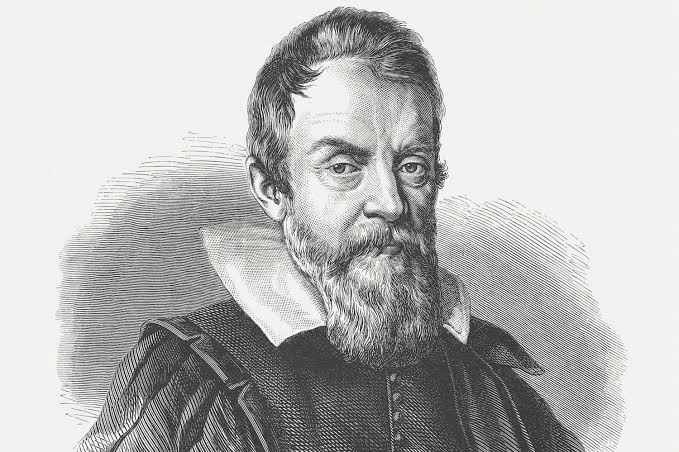
Galileo Galilei (1564–1642) was an Italian astronomer, physicist, and engineer, often referred to as the “father of modern science.” His work in astronomy and physics helped lay the foundation for the scientific revolution. Galileo is most famous for his improvements to the telescope and his astronomical observations, including discovering the four largest moons of Jupiter (now known as the Galilean moons), observing the phases of Venus, and supporting the heliocentric theory proposed by Copernicus, which stated that the Earth and planets revolve around the Sun.
Galileo also made significant contributions to motion and gravity, conducting experiments that led to a better understanding of acceleration and the laws of falling objects. His ideas often conflicted with the teachings of the Catholic Church, especially his support for the heliocentric model, which led to his trial and house arrest later in life. Despite this, Galileo’s work revolutionized science, and his methods of observation and experimentation continue to influence scientific inquiry today.
What did Galileo discover about Jupiter?
Answer me!
Akbar the Great (1542–1605) – India
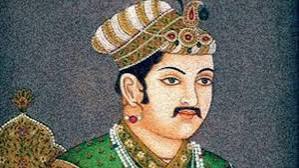
Akbar the Great (1542–1605) was the third emperor of the Mughal Empire in India and is considered one of its most notable rulers. Ascending the throne at a young age, Akbar was known for his military prowess, administrative skills, and efforts to create a more inclusive empire. He expanded the Mughal Empire to nearly all of the Indian subcontinent through a series of successful military campaigns, solidifying Mughal control over much of northern and central India.
Akbar is also renowned for his policy of religious tolerance. He sought to integrate various religious communities, including Hindus, Muslims, Jains, and others, into his administration. He abolished discriminatory taxes on non-Muslims and encouraged debates between scholars of different faiths at his court, creating a more inclusive and diverse empire. His commitment to fair governance, cultural exchange, and the arts made his reign a golden age for the Mughal Empire.
Additionally, Akbar was a patron of the arts and promoted a fusion of Persian, Indian, and Central Asian cultures, which influenced architecture, painting, and literature during his rule. His leadership laid the foundation for a prosperous and expansive Mughal Empire, which continued to thrive under his successors.
What was Akbar the Great known for in terms of religious tolerance?
Answer me!
Isaac Newton (1642–1727) – England
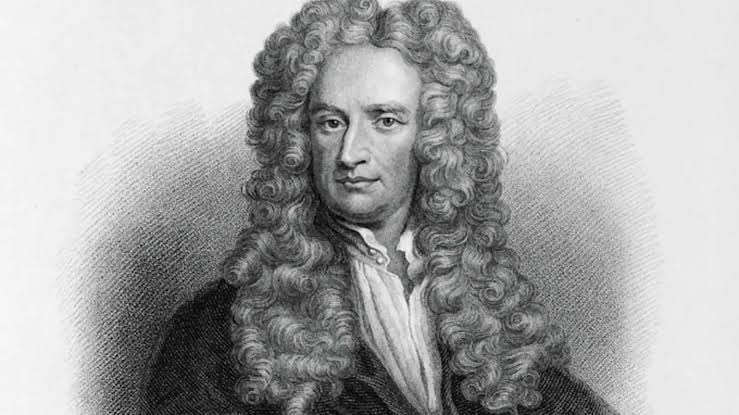
Isaac Newton (1642–1727) was an English mathematician, physicist, astronomer, and author, widely recognized as one of the most influential scientists of all time. He is best known for developing the laws of motion and universal gravitation, which laid the foundation for classical mechanics. His work in the field of calculus (though independently developed by Gottfried Wilhelm Leibniz at the same time) helped shape modern mathematics.
Newton’s most famous work, the “Principia” (1687), introduced his three laws of motion, which explain how objects move and interact with forces, and his law of universal gravitation, which posits that every mass in the universe attracts every other mass with a force proportional to the product of their masses and inversely proportional to the square of the distance between them. These principles revolutionized the understanding of the physical world.
In addition to his work in physics and mathematics, Newton made significant contributions to optics, studying the nature of light and color and developing a theory of color based on the observation that a prism could split white light into the colors of the spectrum. Newton’s groundbreaking contributions to science have had an enduring impact on fields ranging from physics to astronomy, mathematics, and even engineering.
Fun fact:
Isaac Newton once experimented with putting a needle in his eye to study the effect of pressure on his vision! He believed this could help him understand the nature of light, though it was certainly a dangerous experiment by today’s standards.
Catherine the Great (1729–1796) – Russia
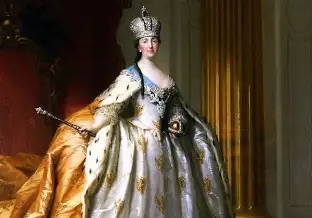
Catherine II, also known as Catherine the Great (1729–1796), was the Empress of Russia from 1762 until her death. Born in Prussia as Sophie Friederike Auguste von Anhalt-Zerbst, she married the future Emperor Peter III of Russia, but after his abdication, she ascended to the throne. Known for her intelligence and strong political acumen, Catherine is credited with significantly expanding the Russian Empire and modernizing Russia, making it one of the great powers of Europe.
Catherine was a patron of the arts, education, and philosophy, and she corresponded with leading intellectuals of the time, including Voltaire and Diderot. She is often remembered for promoting the Enlightenment in Russia, initiating reforms in law, education, and government. However, her rule also saw the expansion of Russian territory through military victories, including the Partition of Poland, which divided the Polish-Lithuanian Commonwealth among Russia, Prussia, and Austria.
Despite some limitations in her reforms, Catherine the Great is remembered as one of Russia’s most successful and influential rulers, transforming Russia into a major European power.
What was Catherine the Great known for in terms of her contributions to Russian culture?
Answer me!
Toussaint Louverture (1743–1803) – Haiti
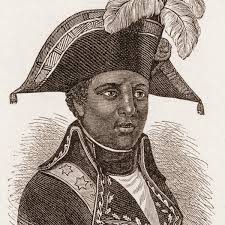
Toussaint Louverture (1743–1803) was a leader of the Haitian Revolution and is regarded as one of the most influential figures in the fight against slavery. Born into slavery on the French colony of Saint-Domingue (now Haiti), Louverture rose to prominence as a military leader and skilled strategist. He played a key role in leading the enslaved population in a revolt against French colonial rule and the brutal system of slavery that had been in place for centuries.
Louverture’s leadership and military prowess were instrumental in the success of the Haitian Revolution, which ultimately led to the establishment of Haiti as the first independent black republic in 1804. He worked to secure autonomy for the colony, enacted policies that promoted economic stability, and attempted to reconcile the diverse factions involved in the revolution, including former slaves and free people of color. Although Louverture initially sought to maintain French control in Haiti, he later declared independence from France when his efforts were thwarted by Napoleon Bonaparte’s forces.
Despite being captured by the French in 1802 and dying in exile in France, Louverture’s legacy as a symbol of resistance to oppression and slavery
continues to inspire people around the world.
Fun fact:
Toussaint Louverture was known for his skills in horsemanship and often fought on horseback, which added to his legendary status as a military leader during the Haitian Revolution.
Simón Bolívar (1783–1830) – South America
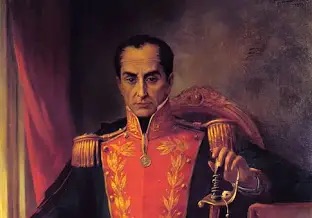
Simón Bolívar (1783–1830) was a Venezuelan military and political leader who played a key role in the independence movements of several South American countries from Spanish rule. Known as “El Libertador” (The Liberator), Bolívar led the fight for independence in Venezuela, Colombia, Ecuador, Peru, and Bolivia, earning him a lasting legacy as one of the most important figures in Latin American history.
Bolívar was inspired by the ideas of the Enlightenment, and his vision for a united Latin America, often referred to as Gran Colombia, was aimed at creating a federation of republics. Although his dream of a united continent was never fully realized due to regional conflicts, Bolívar’s efforts helped shape the independence of much of South America from Spanish colonial rule. Bolívar was not only a military strategist but also a statesman who sought to modernize the political structures of the newly independent nations.
Despite his successes, Bolívar faced political challenges and internal divisions that led to the collapse of his vision for a united Latin America. He died in 1830, disillusioned with the political fragmentation of the countries he helped liberate. However, his legacy as a champion of independence and freedom continues to resonate in Latin America.
What was Simón Bolívar’s nickname?
Answer me!
Florence Nightingale (1820–1910) – England
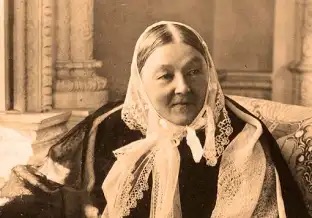
Florence Nightingale (1820–1910) was an English social reformer and the founder of modern nursing. She gained fame during the Crimean War, where she organized care for wounded soldiers, significantly improving hygiene and sanitation in military hospitals. Nightingale’s work drastically reduced mortality rates and earned her the nickname “The Lady with the Lamp” for her habit of making rounds at night to care for the sick.
Nightingale’s contributions extended beyond the battlefield; she was a pioneer in healthcare statistics and used data visualization to advocate for hospital reform and public health improvements. Her work led to the establishment of the first professional training school for nurses, the Nightingale Training School at St Thomas’ Hospital in London, which helped professionalize nursing as a respected career. Florence Nightingale’s influence on healthcare reform, sanitation practices, and nursing education has had a lasting impact worldwide.
Fun fact:
Florence Nightingale was the first woman to be elected a fellow of the Royal Statistical Society, thanks to her groundbreaking use of data and statistical graphics to improve healthcare and hospital conditions.
Karl Marx (1818–1883) – Germany
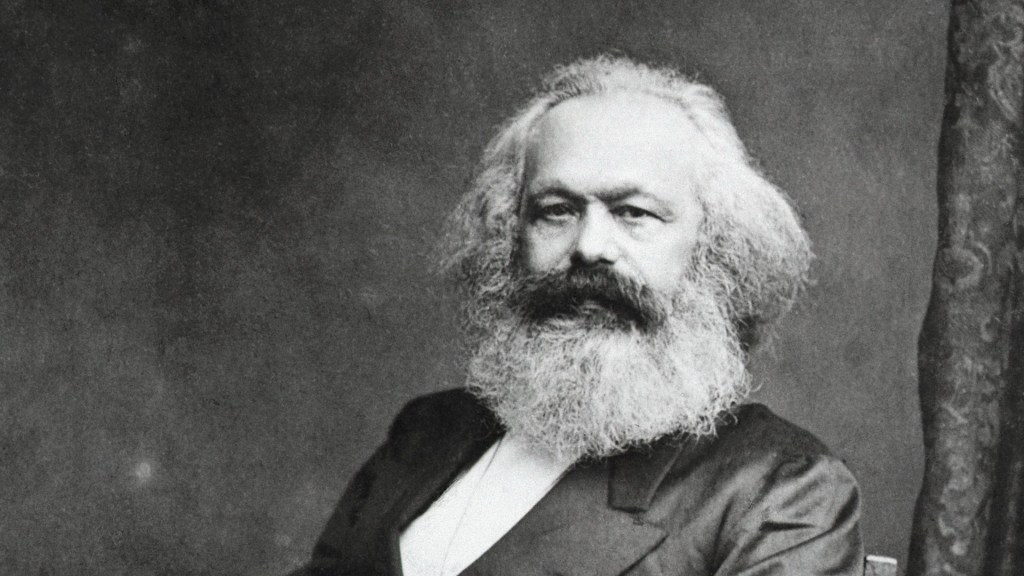
Karl Marx (1818–1883) was a German philosopher, economist, historian, and social theorist, best known for his works on communism and his analysis of capitalism. Marx co-authored The Communist Manifesto (1848) with Friedrich Engels, in which they called for the working class to overthrow the capitalist system and establish a classless society. Marx’s ideas are laid out in his seminal work, Das Kapital, where he critiques the exploitation of workers under capitalism and argues that the inherent contradictions within the capitalist system would ultimately lead to its collapse.
Marx’s theory of historical materialism posits that the structure of society and its economic systems shape human history and social relations. He argued that all societies go through stages of development driven by changes in the means of production, such as feudalism, capitalism, and eventually socialism and communism.
Marx’s ideas became the foundation for Marxism, which influenced political movements and revolutions around the world, including the Russian Revolution and the rise of communist states in the 20th century. While Marx’s predictions about the inevitable collapse of capitalism and the rise of communism have been debated, his work remains a cornerstone of political and economic theory.
What is the name of the famous book Karl Marx co-authored with Friedrich Engels?
Answer me!
Marie Curie (1867–1934) – Poland/France

Marie Curie (1867–1934) was a pioneering scientist born in Poland and later naturalized as a French citizen. She is best known for her groundbreaking research on radioactivity, a term she coined, and for being the first woman to win a Nobel Prize and the only person to win Nobel Prizes in two different sciences: Physics (1903) and Chemistry (1911).
Curie’s most notable achievements include the discovery of the radioactive elements polonium (named after her native Poland) and radium, along with her development of techniques for isolating radioactive isotopes. Her work not only advanced the field of physics but also had profound implications in medicine, particularly in the development of radiation therapy for treating cancer.
Despite facing significant challenges as a woman in science, Curie became a symbol of intellectual determination and scientific integrity. Her contributions laid the foundation for later advancements in nuclear physics and chemistry, and her legacy continues to inspire scientists worldwide.
Fun fact:
Marie Curie was the first woman to ever be buried in the Panthéon in Paris for her own merits, a prestigious honor given for her exceptional contributions to science.
Conclusion: Diverse Legacies, Shared Impact
These 15 figures demonstrate that individuals, regardless of their background or era, can inspire profound societal shifts. Their legacies, while celebrated, also invite critical reflection on the ethical complexities and long-term impacts of their contributions.
 All about Social Studies
Leave a comment